Showing posts with label Saints. Show all posts

Wednesday, August 19, 2009

St. Bernard of Clairvaux, Hymn Writer and Theologian

Today the Christian Church gives thanks for our brother, Bernard of Clairvaux, who beautified the Gospel of our Lord Jesus Christ with wonderful hymns such as this:


From our Synod's Website:
Bernard of Clairvaux, Hymnwriter and Theologian
A leader in Christian Europe in the first half of the 11th century A.D., Bernard is honored in his native France and around the world. Born into a noble family in Burgundy in 1090, Bernard left the affluence of his heritage and entered the monastery of Citeaux at the age of 22. After two years he was sent to start a new monastic house at Clairvaux. His work there was blessed in many ways. The monastery at Clairvaux grew in mission and service, eventually establishing some 68 daughter houses. Bernard is remembered for his charity and political abilities, but especially for his preaching and hymn composition. The hymn texts “O Jesus, King Most Wonderful” and “O Sacred Head, Now Wounded” are part of the heritage of the faith left by Saint Bernard.


And from Issues, etc. :

Monday, August 17, 2009

Johann Gerhard on Prayer

Today the Lutheran Church--Missouri Synod commemorates Johann Gerhard. If you have never experienced the beauty and depth of the truly Evangelical piety of our dear Gerhard, you must check out Meditations of Divine Mercy, translated by Rev. Matthew Harrison.

Gerhard has some of the most moving and beautiful words I have ever read about prayer:

Pious prayer offered in faith is familiar conversation with God. It is the salutary remedy to all the difficulties of life. It is the key to heaven and the door to paradise. It shows us how much we depend on God. It is a shield for our defense and a faithful messenger of the ambassador. It is refreshment in the heat of misfortune; it is medicine during illness. It is a winch, drawing us to heaven, and a vessel that draws water from the font of divine kindness. It is a sword against the devil and a defense against misfortune. It is a wind that blows away evil and brings earthly benefits. It is a nurse that nurtures virtue and gives free access to God. It is a spiritual feast and a heavenly delicacy. It is a consolation for the dejected and a delight for the holy. It
grants knowledge of the secret things of God and acquires His gifts. It upholds
the world and rescues people. It is a joy for the heart and a jubilation for the
mind. It follows God's gift of grace, and it leads ahead into glory. It is a
garden of happiness and a tree full of delights. It calms the conscience and
increases thankfulness. It sends demons running and draws angels close. It is a
soothing remedy for the misfortunes of this life and the sweet smell of the
sacrifice of thanksgiving. It is a foretaste of the life to come and sweetens
the bitterness of death.

You can imagine the beauty, poetry, depth of piety and faithfulness of the
prayers the rest of this little gem of a prayer book contains!

From our Synod's Website:

Johann Gerhard (1582–1637) was a great Lutheran theologian in the tradition of Martin Luther (1483–1546) and Martin Chemnitz (1522–86) and the most influential of the 17th-century dogmaticians. His monumental Loci Theologici (23 large volumes) is still considered by many to be a definitive statement of Lutheran orthodoxy. Gerhard was born in Quedlinburg, Germany. At the age of 15 he was stricken with a life-threatening illness. This experience, along with guidance from his pastor, Johann Arndt, marked a turning point in his life. He devoted the rest of his life to theology. He became a professor at the University of Jena and served many years as the Superintendent of Heldberg. Gerhard was a man of deep evangelical piety and love for Jesus. He wrote numerous books on exegesis, theology, devotional literature, history, and polemics. His sermons continue to be widely published and read.


And from Issues, etc. :

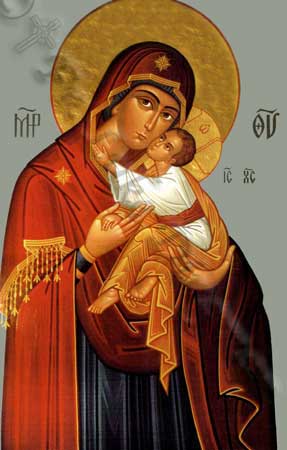
Commemorating the Blessed Virgin

Yesterday at Good Shepherd we observed the feast of the Blessed Virgin Mary. I did something I don't usually do, I "free-texted." Don't anathematize me yet! I love the Magnificat, but that beautiful hymn of the Blessed Virgin is not the only confession that she makes about her adorable Son, our Savior, Jesus Christ. Just as beautiful, though not as poetic, is her faith in her holy Son at the wedding feast at Cana: "Do whatever He tells you." This is a beautiful teaching of the Blessed Virgin. It flies directly in the face of that view of her as intercessor or mediatrix. She is not interested in turning His head. She is not interested in manipulating His will for His people. She trusts that He will work for good for His people. She doesn't know how He will do it. She doesn't know when He will do it and she doesn't know if He will do it the way she wills. She simply trusts that doing what He tells us will be to our blessing.

And it always is! Christ is always interested in our blessing. We may not always recognize it, but it is true. Mary knows this and she teaches us to trust this truth as well. He whom she held in her motherly arms, He whom she cradled and nursed, He whom she cared for as an infant will care for her and us more thoroughly than we can ever imagine. Had He not changed the water into wine, He still would have given Mary and the wedding guests what they truly needed.

Mary does not turn the head of her Son any more than any other saint for whom He has shed His holy and precious blood, but she is indeed blessed amongst women, for she trusts in her holy Son for all good things. What a blessing the faith of the Virgin Mother is to us! We listen to her as our Mother as well and do whatever her precious Son tells us to do, trusting that His loving-kindness and mercy is more than sufficient for our eternal comfort and peace.

Monday, August 10, 2009

St. Lawrence, Deacon and Martyr

Today the church catholic gives thanks for the life, service, and faithful martyrdom of St. Lawrence, deacon and martyr.
From Foxe's Book of Martyrs*:

Now let us enter the story of that most constant and courageous martyr of
Christ, St. Lawrence, whose words and works deserve to be as fresh and green in
Christian hearts, as is the flourishing laurel-tree...Let us draw near to the
fire of martyred Lawrence, that our cold hearts may be warmed thereby. The
merciless tyrant, understanding him to be not only a minister of the sacraments,
but a distributor also of the Church riches, promised to himself a double
prey,by the apprehension of one soul.... With furious face and cruel
countenance, the greedy wolf demanded where this Lawrence had bestowed the
substance of the Church: who, craving three day's respite, promised to declare
where the treasure might be had. In the meantime, he caused a good number of
poor Christians to be congregated. So, when the day of his answer was come, the
persecutor strictly charged him to stand to his promise. Then valiant Lawrence,
stretching out his arms over the poor, said: "These are the precious treasure of
the church; these are the treasure indeed, in whom the faith of Christ reigneth,
in whom Jesus Christ hath His mansion-place. What more precious jewels can
Christ have, than those in whom He hath promised to dwell? For so it is written,
'I was hungry and ye gave me to eat; I was thirsty and ye gave me to drink; I
was harbourless and ye lodged me.' And again; 'Look, what ye have done to the
least of these, the same have ye done to me.' What greater riches can Christ our
Master possess, than the poor people, in whom He loveth to be seen?"


Laurence, Deacon and Martyr

Early in the third century A.D., Laurence, most likely born in Spain, made his way to Rome. There he was appointed chief of the seven deacons and was given the responsibility to manage church property and finances. The emperor at the time, who thought that the church had valuable things worth confiscating, ordered Laurence to produce the “treasures of the church.” Laurence brought before the emperor the poor whose lives had been touched by Christian charity. He was then jailed and eventually executed in the year 258 by being roasted on a gridiron. His martyrdom left a deep impression on the young church. Almost immediately, the date of His death, August 10, became a permanent fixture on the early commemorative calendar of the Church.


Almighty God, You called Lawrence to be a deacon in Your Church to serve Your saints with deeds of love, and you gave him the crown of martyrdom. Give us the same charity of heart that we may fulfill Your love by defending and supporting the poor, that by loving them we may love You with all our hearts, through Jesus Christ, our Lord, who lives and reigns with You and the Holy Spirit, one God, now and forever.

Amen.

*edited by W. Grinton Berry, reprinted by Fleming H. Revell, a division of Baker Book House Company, Spire edition published 1998.

Saturday, April 04, 2009

Want to preach good funeral sermons?

Then start by preaching the commemorations and feast days of those blessed saints who have gone before us in the faith whenever possible (although I think it best to keep with the Sunday readings unless a saint's feast day falls on the Lord's Day and it is not already a feast of Christ).

That is how I look at funerals, as feast days of saints of God in Christ, for that is truly what those faithful departed are, full and complete saints, revelling the in the glory of the Lamb who was slain. When preaching on a saint day or commemoration, we Lutherans know that we do not preach about the individual, but rather about that golden and precious thread of faith that binds them to Christ and through Him to all the Church, militant and triumphant. Indeed, precious in the sight of the Lord is the death of His saints!

Wednesday, March 18, 2009

Whoa! What a break!

To those of you who may have feared that I had given up the ghost, I am still alive, still preaching and teaching, still thinking about things, but I have not had much desire to blog for quite some time.
We are in the midst of the Lenten season, as are all Western Christians. At Good Shepherd this Lent we are looking at the faithful example of the saints who have gone before us: Ash Wednesdaywas faithful Polycarp who boldly and faithfully served his Lord until his grizzly and blessed death. Next was Sts. Perpetua and Felicitas, young mothers who gave up everything rather than deny their Lord and Savior, St. Patrick with his missionary zeal and faithfulness to the orthodox teaching of the Holy and Blessed Trinity, may we all bind unto ourselves Christ and Him crucified! Tonight we looked at St. Joseph, the chaste and faithful guardian of our Lord Jesus Christ. He teaches us to guard that good and godly treasure of Christ crucified, the only begotten Son of the eternal Father.

We look forward with repentant joy and contrite anticipation to the dramatic events of Holy Week. Good Shepherd will gather to pray a cappella Matins Holy Monday through Holy Wednesday at 8 am. Maundy Thursday at 7 pm we celebrate our Lord's Institution of the Holy Eucharist and His command to love one another (we also will have individual Holy Absolution the the somber Stripping of the Altar). Good Friday we celebrate the Cheif Service with the complete Passion account and the Holy Eucharist at 12 noon and Tennebrae Vespers with the seven final words of Christ from the Cross at 8 pm. Holy Saturday a cappella Matins at 9:30 am, Easer Vigil at 8:10 pm (sunset, weather permitting we will begin outside of the church and process in with candlelight). Easter sunrise Matins (again, beginning outside, weather permitting) at 6:55 am, we break our Lenten fast with Easter breakfast at 8 am. We then feast the Resurrection with the risen Body and Blood of Christ with the Divine Service at 9:30 am.

If you are in the area, join us! A blessed Lenten, may your hearts be prepared to celebrate the Paschal feast.

Wednesday, June 11, 2008

St. Barnabas, Beloved of God

Today the Church remembers and thanks God for St. Barnabas, Apostle. His name means "son of encouragement, consolation," and the Biblical witness gives ample testimony that he lived up to his name.

We first meet Barnabas in Acts 4 when St. Luke, the author of Acts, says that the early Christians "were of one heart and soul, and no one said that any of the things that belonged to him was his own, but they had everything in common" (Acts 4:32). In our day, when diversity is trumpeted and even Christians seem to revel in how different they can be from one another, such a comment from St. Luke is quite the encouragement that there can indeed be something better. The unity of Christians in faith and life is indeed an encouragement and consolation.

We can indeed learn a lot from the early Church of Acts, and from Barnabas himself. As we are told of the early Christians selling their own property - perhaps the equivalent of "vacation homes" and extra land - we meet Barnabas in Acts 4:36: "Thus Joseph, who was also called by the apostles Barnabas (which means son of encouragement), a Levite, a native of Cyprus, sold a field that belonged to him and brought the money and laid it at the apostles' feet." What a great example of Christian charity! Barnabas saw the opportunity to use his wealth to proclaim Jesus Christ crucified and risen and to extend the kingdom of God. What great encouragement our Lord gives when His people give generously so that the Gospel may be proclaimed and His kingdom promoted.

The next time we encounter this Apostle of encouragement he comes to the rescue, humanly speaking, of the Apostle Paul. Acts 9 gives us the conversion of St. Paul, formerly a persecutor of Christians. With good reason many in the early Church were quite nervous about this man who had previously hunted down and killed their brothers and sisters in the true faith. However, "Barnabas took him and brought him to the apostles and declared to them how on the road he had seen the Lord, who spoke to him, and how at Damascus he had preached boldly in the name of Jesus" (Acts 9:27). What great encouragement Barnabas gave to St. Paul that someone would defend him and his name as a fellow Christian. What great consolation he gave to the other apostles that St. Paul was "the real deal" for preaching the Gospel of Jesus Christ.

So on this day we thank God for St. Barnabas, for his selfless, generous charity, and for his defense of St. Paul's reputation as a bona fide apostle to proclaim Jesus Christ crucified and risen for sinners. Let us pray that God will lead us also to be generous with our wealth so that the Gospel may be proclaimed and the kingdom of Christ may expand. Let us pray that God will give us the good courage to defend and support our pastors as they proclaim the mercies and life of Jesus Christ our Savior.

Collect of the Day (LSB)
Almighty God, Your faithful servant Barnabas sought not his own renown but gave generously of his life and substance for the encouragement of the apostles and their ministry. Grant that we may follow his example in lives given to charity and the proclamation of the Gospel; through Your Son, Jesus Christ, our Lord, who lives and reigns with You and the Holy Spirit, one God, now and forever. Amen.

Readings for the Day (LSB)
Isaiah 42:5-12
Acts 11:19-30; 13:1-3
Mark 6:7-13

Hymn Verse
For Barnabas we praise You,
Who kept Your law of love
And, leaving earthly treasures,
Sought riches from above.
O Christ, our Lord and Savior,
Let gifts of grace descend,
That Your true consolation
May through the world extend. (LSB 518:17)

Tuesday, August 21, 2007

Commemoration Days

This summer at Good Shepherd we have been observing the commemoration days and festivals of saints in Lutheran Service Book. I have been moving the festival to the preceding Sunday. It has been nice because it breaks up the sea of green. There are some downsides and I don't think I would do it every summer. There is something lost with the continuity of the pericopal readings and there is only so much you can say about the saints: they were all sinners in need of God's forgiveness in Christ; they all lived in the mercy and grace of our Lord Jesus; they all present faithful examples of lives lived in the faith.

One nice thing, from a theological point of view, is celebrating the saints during the season of the Church is a great way to emphasize what the church is; "the congregation of true saints and believers." It also brings a great opportunity to teach what Lutheranism is: holy, catholic, apostolic and confessional.

Monday, July 23, 2007

St. James the Elder

This coming Sunday, the Good Shepherd saints will give thanks for the faithfulness of one of the Sons of Thunder, St. James the Elder. You remember James, in one gospel we see his mother asking for her sons glory in the coming kingdom, in another gospel we see James and John asking for glory in the coming kingdom. Again, we see these sons of Zebedee seeking glory rather than suffering when they ask to call down punishment on the inhabitants of Samaria.

In the midst of all this glory seeking we are interupted by the epistle from Romans 8:28-39.

And we know that for those who love God all things work together for good, for those who are called according to his purpose. For those whom he foreknew he also predestined to be conformed to the image of his Son, in order that he might be the firstborn among many brothers. And those whom he predestined he also called, and those whom he called he also justified, and those whom he justified he also glorified.

What then shall we say to these things? If God is for us, who can be against us? He who did not spare his own Son but gave him up for us all, how will he not also with him graciously give us all things? Who shall bring any charge against God’s elect? It is God who justifies. Who is to condemn? Christ Jesus is the one who died—more than that, who was raised—who is at the right hand of God, who indeed is interceding for us. Who shall separate us from the love of Christ? Shall tribulation, or distress, or persecution, or famine, or nakedness, or danger, or sword? As it is written, "For your sake we are being killed all the day long; we are regarded as sheep to be slaughtered."

No, in all these things we are more than conquerors through him who loved us. For I am sure that neither death nor life, nor angels nor rulers, nor things present nor things to come, nor powers, nor height nor depth, nor anything else in all creation, will be able to separate us from the love of God in Christ Jesus our Lord.

And then, as so often happens, I am reading along for fun, not even thinking about sermon preparation, and God hands me a jewel to adorn His Gospel. This quote from The Hammer of God we see the beauty of the theology of the cross:

“You see, atonement comes only through suffering. Through suffering our Savior opened the gates of Heaven, through suffering his apostles carried the Gospel out in the world--rejoicing that they were counted worthy to suffer. It is a great favor to bear testimony to Christ by suffering in His fellowship. I believe Scripture calls it bearing in the body the marks of the Lord Jesus. Usually we suffer only for our own sins. But sometimes we are given the favor of suffering for the sins of others. That is part of the mystery of the Atonement: when one is joined to Christ, one is given the task of lifting a portion from a certain sinner and suffering in his stead, so that he does not have to carry alone all the bitterness of his deeds.”
The Hammer of God, pg. 312

Monday, May 07, 2007

C. F. W. Walther, Doctor and Confessor

Today the Church gives thanks for the faithful witness and teaching of CFW Walther.
The following link gives some great information and devotional thoughts on our beloved Dr. Walther.
Aardvark Alley: C. F. W. Walther, Doctor and Confessor

Issues, Etc. also had an interesting piece on Dr. Walther yesterday. Download the audio here: KFUO WMA audio

To read some of Walter's wonderful Law/Gospel works, check out the daily devotional from CPH, God Grant It.

Tuesday, May 09, 2006

The Importance of the Virgin Mary

Yes, she is important, very important to the Christian faith. Yes, I am a Lutheran, very Lutheran. But I have been thinking about the Blessed Virgin (I know, that sounds Catholic or Orthodox, but she most certainly is "blessed"; Luke 1:28, 45, 48 [especially]), and her central role in the Christian faith.

First, I do not in any fashion advocate Mary as an intercessor or mediator, "for there is one God, and there is one mediator between God and men, the man Christ Jesus" (1 Timothy 2:5.)
However, to totally kick her out of the picture is unfair and I believe dangerous. She is the very Mother of God, the gottes mutter or theotokos or mater theou (Ap. XXI, 27; SA I, IV, Latin; FC SD VIII, 24.)

We confess that in all three ecumenical creeds (conceived of the Holy Spirit, born of the Virgin Mary...incarnate by the Holy Spirit of the Virgin Mary...and man of the substance of His mother.) Besides Pontius Pilate, she is the only other person mentioned in the creeds.

Without her humility, her obedience, her favored position, we would not have a Christ (granted, God certainly could have used someone else, but her faith was great.) She is the human part of the equation. Her humanity is the reason Christ was able to die for the sins of the world, including her own sinfulness. And while I will not worship or pray to her, I will certainly give thanks to God for her often. I will remember her in my devotions, and I will look to her as an example of an obedient and humble servant of the Most High God.

I also would encourage the celebration of her feast days in the Lutheran Church (i.e., the Feasts of the Purification, Annunciation, and Visitation,) as well as the feast days of other pillars and defenders of the Christian faith (i.e., John the Baptizer and Forerunner, Peter, Paul and the Apostles, Luther, Augustine to name a few.)

Some may think I've lost it. Maybe I have, but that should really be a given. The Blessed Virgin Mary is an example of pure love for Christ, of obedience to the Holy Triune God, and the bearer of Salvation for all humanity, including her own, in the one perfect God-man Jesus Christ.